The patterns, the surprises, and the one thing that makes AI stick.
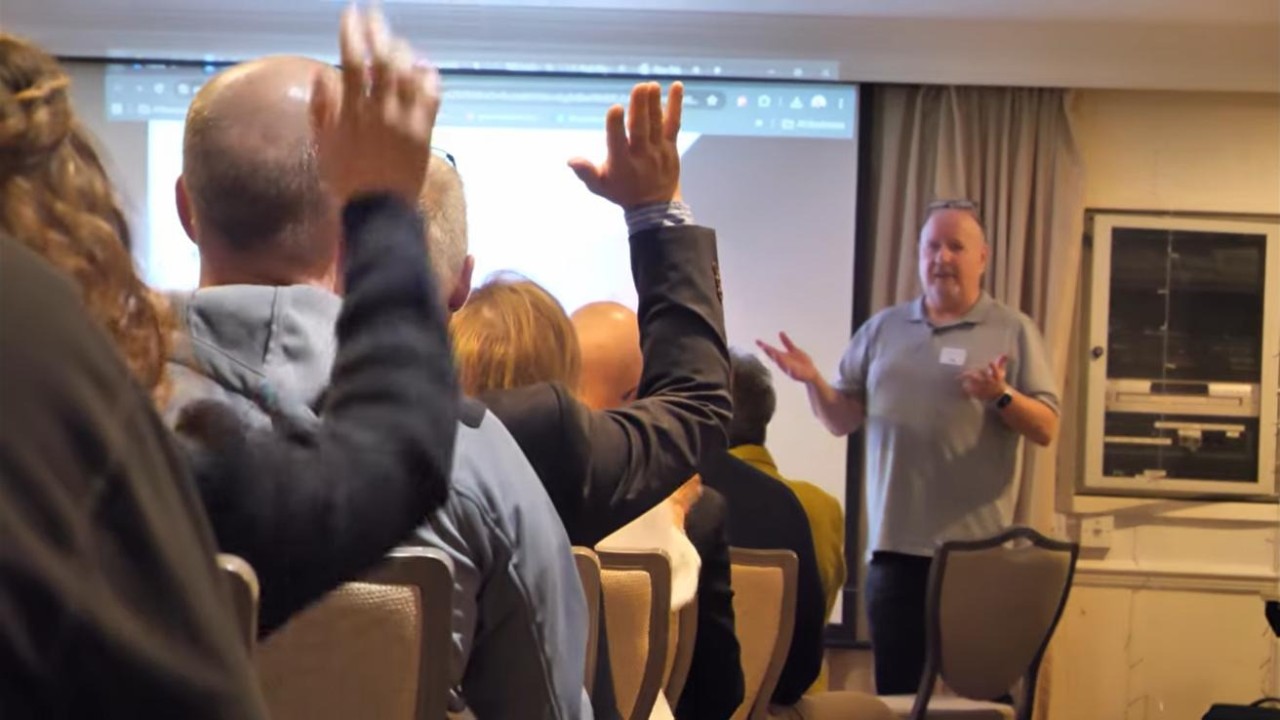
I've trained over 4,000 professionals on AI in the last two years.
Corporate teams, mainly. Directors, department heads, marketing teams, finance teams, HR, operations. Complete beginners through to people who considered themselves advanced.
300+ workshops delivered. Every sector from healthcare to manufacturing to professional services.
And after all of that, I've learned things about how people adopt AI that you won't find in any course, any YouTube video, or any LinkedIn post telling you to "just start using ChatGPT."
I want to share the biggest lessons. Not the technical ones. The human ones. Because those are the ones that determine whether AI transforms how you work or becomes another tab you forget to open.
1. The first reaction is almost always the same
Fear. Not excitement. Fear.
People walk into my sessions worried about looking stupid in front of colleagues. Worried about breaking something. Worried that everyone else "gets it" and they don't.
I've seen directors of 25 years go quiet because they don't want to admit they've never used ChatGPT. I've seen team leaders avoid eye contact when I ask who's tried AI before.
This isn't a technology problem. It's a confidence problem. And it evaporates the moment someone sits with them and shows them, without judgement, how straightforward it is.
By the end of almost every session, the person who was most nervous at the start is the most excited. Every single time.
The lesson: If you've been avoiding AI because it feels intimidating or confusing, you're not behind. You're normal. And you're one short session of proper guidance away from a completely different perspective.
2. The people who get the worst results are the ones who've "already tried it"
This surprised me at first. You'd think experience with AI would be an advantage. Often it's the opposite.
People who've used ChatGPT a few times have usually formed an opinion based on poor results. They typed something vague, got something generic, and concluded the tool wasn't very good.
They walk in with low expectations and a slightly defensive posture. "I've tried it. It's OK for basic stuff but it can't do what I do."
Then I show them what happens when you brief AI properly. When you give it role, context, audience, tone, format, and examples. When you treat it like a capable colleague on their first day instead of a search engine.
The shift is instant. And slightly awkward, because they realise they've been writing off a tool that could have been saving them hours every week for months.
The lesson: If you tried AI once and weren't impressed, you didn't see AI at its best. You saw AI without instructions. Those are very different things.
3. The gap between "interesting" and "useful" is smaller than people think
Most AI content online is interesting. Tips, tricks, lists of "100 prompts that will change your life." People consume it, nod along, and change nothing.
The gap between consuming AI content and using AI in your daily work isn't a knowledge gap. It's an application gap. People know what AI can do in theory. They don't know how it applies to THEIR proposal process, THEIR content schedule, THEIR client communication.
In my sessions, we close that gap in one move: we stop talking about AI and start USING it. On real tasks. From the room.
Someone brings their actual proposal structure. We build a workflow around it. Someone else brings their content process. We build prompts that match their voice. Someone brings their research method. We show them how to do it in a fraction of the time.
By the end, they haven't just "learned about AI." They've already used it. The workflow exists. They tested it. It worked.
That's the difference between training that changes behaviour and training that fills a notebook.
The lesson: You don't need to learn more about AI. You need to USE it, once, properly, on your own work. Everything changes after that first real experience.
4. The biggest time savings come from the most boring tasks
Everyone assumes AI is for the flashy stuff. Writing viral content. Generating images. Building apps.
The reality? The biggest impact I see, consistently, is on the tasks nobody talks about because they're too boring.
Meeting summaries. Client follow-up emails. Data formatting. Report structures. Research compilation. Weekly updates. Invoice descriptions. Status reports.
Meeting notes turned into actions in minutes. Proposals built from a repeatable workflow instead of a blank page. Follow-ups drafted the moment a session ends.
None of that will go viral on LinkedIn. All of it changes how people work, for good.
The lesson: Don't start with the exciting use cases. Start with the task you do every week that you dread. That's where AI pays for itself fastest.
5. Workflows beat prompts, every time
This is the single most important thing I've learned, and it's what separates people who use AI occasionally from people who use it every day.
A good prompt gets you a good result once.
A workflow means you can replicate that result, consistently, in a fraction of the time, forever.
A good proposal workflow isn't a clever prompt. It's a system:
→ Paste in discovery call notes → AI extracts the client's key problems and priorities → AI drafts the proposal structure around those priorities → AI writes each section in his voice (trained on his previous proposals) → He reviews, refines, sends
Same system. Every time. No thinking. No starting from scratch. Feed in the new client's notes and go.
A strong first draft in a fraction of the time, every time.
The lesson: Stop collecting prompts. Start building systems. One good workflow will save you more time than a hundred clever one-off prompts.
6. The people who need this most are the ones least likely to access it
This is the one that's been on my mind constantly.
Corporate teams have budgets. They have training departments. They have someone whose job is to book people like me. The training happens whether individual employees want it or not.
Consultants, coaches, freelancers, and small business owners? They have none of that. They're running everything themselves. Every hour spent learning is an hour not spent earning. And the irony is brutal: the people with the least time are the ones who'd benefit the most from a tool that gives time back.
I've watched hundreds of independent professionals from the sidelines, knowing exactly how I could help, knowing they can't access the kind of hands-on training that makes this stick.